Robertson Questions Hall of Fame Criteria After Zhao Xintong and Mark Allen Inductions

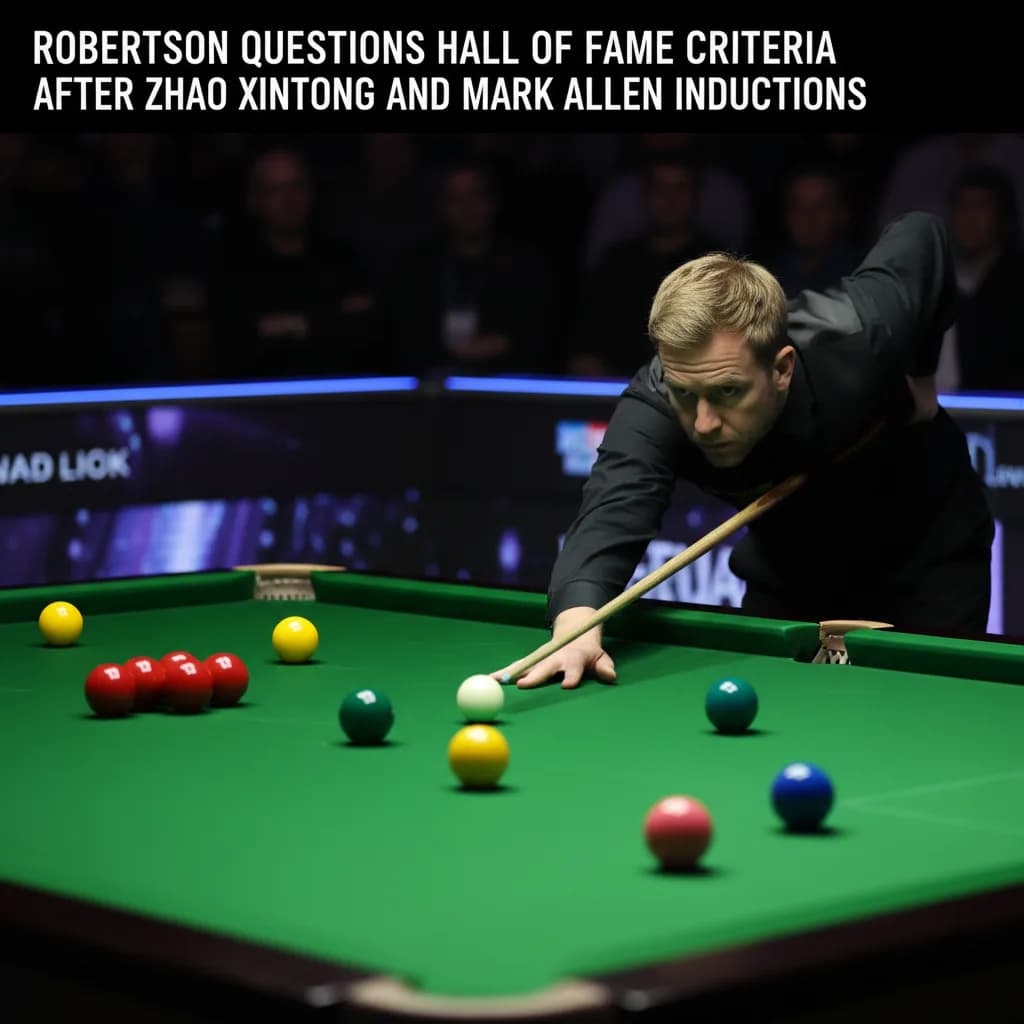
Robertson Fires Back at WST Hall of Fame Decisions
Neil Robertson has publicly challenged the World Snooker Tour's Hall of Fame selection process after Zhao Xintong and Mark Allen were inducted as part of the annual WST awards. The Australian four-time ranking event winner — himself inducted in 2013 — took to X to question whether the honour is being granted with sufficient scrutiny, suggesting the criteria may have been diluted compared to the standards applied in other major sports.
"Many others including myself got in when we were in our 20/30's," Robertson wrote. "[It's] absolutely ridiculous when the real big hitter sports have people with stellar careers get in when they are in their mid 40's or 50's." He added: "It should be something that is earned through decades of work and reputation. Don't get me wrong, I'm proud to be in it. But it seems like a given if you have a half-decent career, which it is not meant to be about that in my opinion."
Zhao's Case: Extraordinary Form, Extraordinary Scrutiny
The induction of Zhao Xintong has attracted the sharpest debate. At just 29 years of age, the Xian-born potter is among the youngest players ever to receive the distinction. Zhao only returned to the professional circuit in late 2024 following a 20-month suspension handed down in connection with the Chinese match-fixing investigation — a period of absence that makes the speed of his subsequent rehabilitation all the more striking, but which some observers feel complicates the conversation around a lifetime honour.
Since his return, however, Zhao has compiled one of the most statistically impressive short-term runs in modern snooker. In 2025, he claimed the World Snooker Championship title at the Crucible as an amateur, having entered through the opening round of qualifying — the first player to win the title via that route since Shaun Murphy in 2005, according to CueTracker records. He then proceeded to sweep the three prestigious Players Series events during the 2025/26 season: the World Grand Prix, Players Championship, and Tour Championship. Adding the Riyadh Season Snooker Championship to his tally brought his total to five titles across a remarkable 12-month stretch.
Zhao also climbed to a career-high ranking of third in the world and, crucially, became only the third player in history — after Ronnie O'Sullivan and Judd Trump — to surpass £1 million in prize money within a single season, per snooker.org data. His Player of the Year award at the WST ceremony was almost universally regarded as uncontroversial; it is the Hall of Fame element that has generated the most friction.
Historical Context: What Does Hall of Fame Entry Typically Require?
Robertson's broader point — that elite sport generally reserves its halls of fame for careers that have reached maturity or conclusion — carries some weight when placed alongside historical precedent. In golf, cricket, and tennis, induction processes typically demand sustained excellence over a minimum of a decade, with many inductees receiving recognition only after retirement. Snooker's Hall of Fame, by contrast, has seen several active players honoured whilst still competing at the highest level, a pattern Robertson argues undermines the prestige of the accolade.
Robertson himself entered the Hall of Fame in 2013, at a point when he had already accumulated his four World Championship titles and numerous ranking event victories. Whether that represents an appropriate benchmark, or whether Zhao's compressed but historically significant achievements justify early consideration, is a question the sport's governing body has not publicly addressed in direct response to the criticism.
Allen Induction Draws Less Controversy
By comparison, the induction of Mark Allen — a former Masters champion and one of Northern Ireland's most decorated professionals — has attracted considerably less pushback. Allen has maintained a sustained presence at the upper tier of the world rankings across more than a decade, and his Hall of Fame case rests on longevity and consistent performances at major events as much as it does on any single landmark achievement.
A Wider Debate the Sport Must Address
Robertson's remarks have clearly resonated within the snooker community, with significant traction on social media following his post. The core issue he raises — at what point does a player genuinely merit permanent, institutional recognition? — is one that the WST may need to confront more formally. A published set of transparent, weighted criteria, similar to those employed by halls of fame in other professional sports, could help provide a more defensible framework and insulate future decisions from the kind of criticism currently being directed at the organisation. Whether the governing body chooses to respond publicly remains to be seen.
