John Virgo: The Boy From Salford Who Found His Life on the Baize

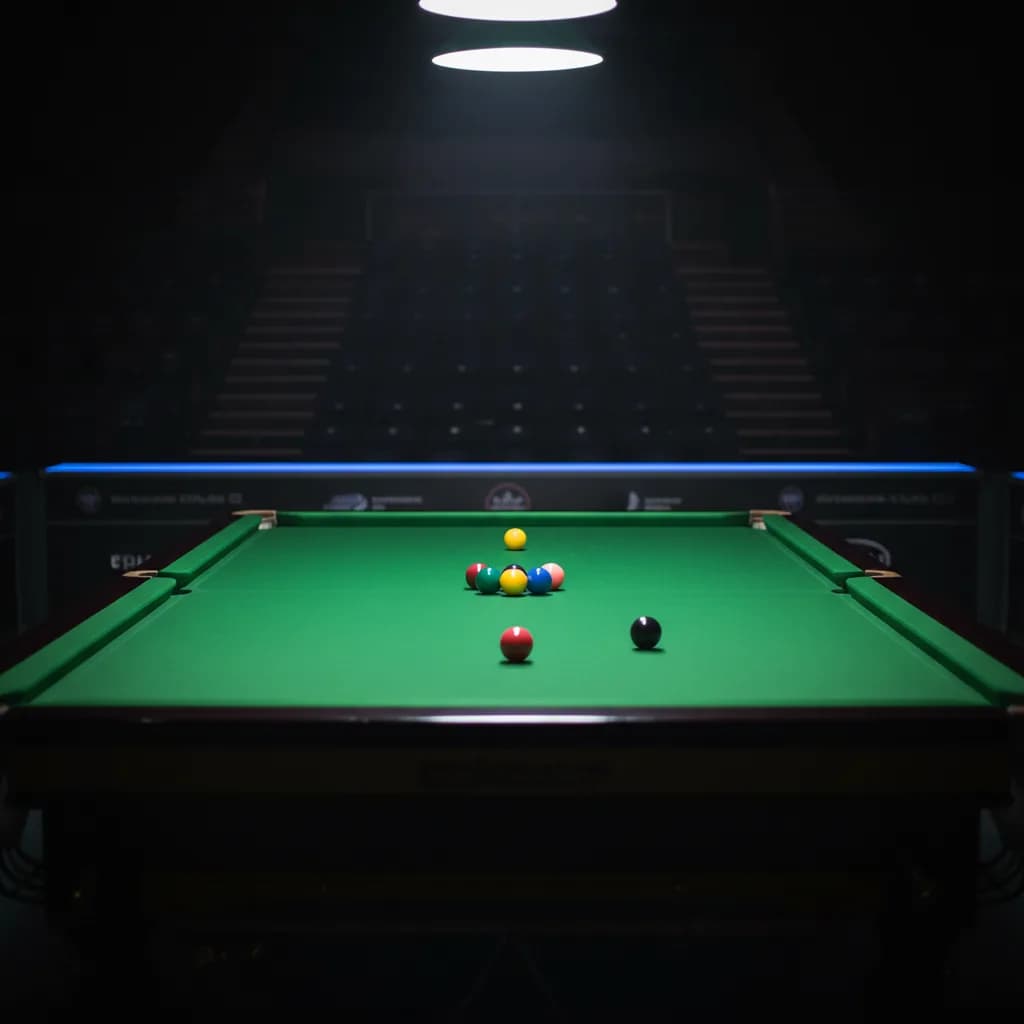
A den of iniquity, a cue ball, and a career that would define an era
He was twelve years old, chasing his football mates down a side street off Trafford Road in Salford, when John Virgo first walked into a snooker club. He hadn't gone looking for a vocation. He'd gone looking for Alan 'Chinner' Heywood. What he found instead would shape the rest of his life — and, in ways nobody could have predicted back in 1958, the lives of millions of television viewers who would come to love him decades later.
Virgo, who has died at the age of 79, was one of the last great characters forged in the crucible of old-school British snooker — the smoke-filled halls, the hum of conversation, the clatter of balls on tired tables. His father William took one look at the place and delivered his verdict without hesitation. "My father said it was a rat pen, a den of iniquity. I didn't even know those words," Virgo recalled years later, with the warm, self-deprecating timing that became his trademark. The ban that followed didn't stick for long. The baize had already done its work.
A player of genuine quality in a transformative era
Born in Salford in March 1946, Virgo grew up in the shadow of the Second World War, kicking footballs around bomb-cratered wasteground with his mates, dreaming of Old Trafford and the Busby Babes he worshipped. Manchester United never left his heart. But snooker claimed something deeper — a precision of mind and hand that football couldn't have accommodated in quite the same way.
He became British Under-16 champion, a title that would later be claimed by three future world champions in Stephen Hendry, Ronnie O'Sullivan and Mark Williams. That pedigree tells you something. And Virgo did go on to reach the pinnacle of the professional game, winning the UK Championship in 1979 — one of snooker's most coveted titles — and reaching the World Championship final at the Crucible that same year, losing to Terry Griffiths in a tournament that announced snooker as unmissable television.
Those who played alongside him speak of a cueist with real gifts — a beautiful technique, an instinct for angles, and, most memorably, an almost eerie feel for where the cue ball would travel. "Where's the cue ball going?" became one of his most beloved catchphrases in later life. The answer, for Virgo, was almost always: exactly where he intended.
The gambling that nearly broke him — and the resilience that didn't
For all his talent, Virgo's story was never without shadows. He was, by his own admission, an inveterate gambler, and the habit that gripped so many men of his generation in professional snooker came close to destroying everything he had built. That he emerged from it with his warmth and wit intact said much about the man underneath the one-liners.
He was also one of the few people who managed to forge a genuine friendship with the volcanic Alex Higgins — a feat that required both patience and a particular kind of emotional intelligence. Virgo never shied away from crediting Higgins with rescuing snooker from obscurity, arguing that the Hurricane had transformed a sport that was "going nowhere" into something "watchable and exciting". Whether or not you agreed with the full weight of that assessment, the affection behind it was unmistakable.
The television years — and a nation's living rooms
It was on television that Virgo truly became a household name, and not only for his punditry. As a co-host of Big Break — the BBC's gloriously daft snooker-themed game show that ran through the 1990s alongside Jim Davidson — Virgo found an audience that extended far beyond the sport's committed fanbase. His physical impressions of fellow professionals, from the hunched intensity of Steve Davis to the languid elegance of Jimmy White, were startlingly accurate and deeply funny. He had a mimic's gift for capturing a man's entire relationship with a cue in a single exaggerated gesture.
Later, as a BBC commentator, he brought that same warmth to the Crucible every April — a reassuring presence in the moments between shots, always ready with a story, always willing to illuminate the game for the uninitiated without ever talking down to the devoted.
John Virgo was, at his core, a man who understood how lucky he had been — a boy who walked into a snooker club looking for his mate and found a life instead. The sport gave him everything, and he gave it back in full: in frames won and championships contested, in laughter generated and friendships kept, and in a career that bridged the gritty, gaslit origins of professional snooker and its glittering modern age. The cue ball, for John Virgo, always found its way home.
