Fifty Years of The Rocket: Ronnie O'Sullivan's Career in Ten Unforgettable Moments

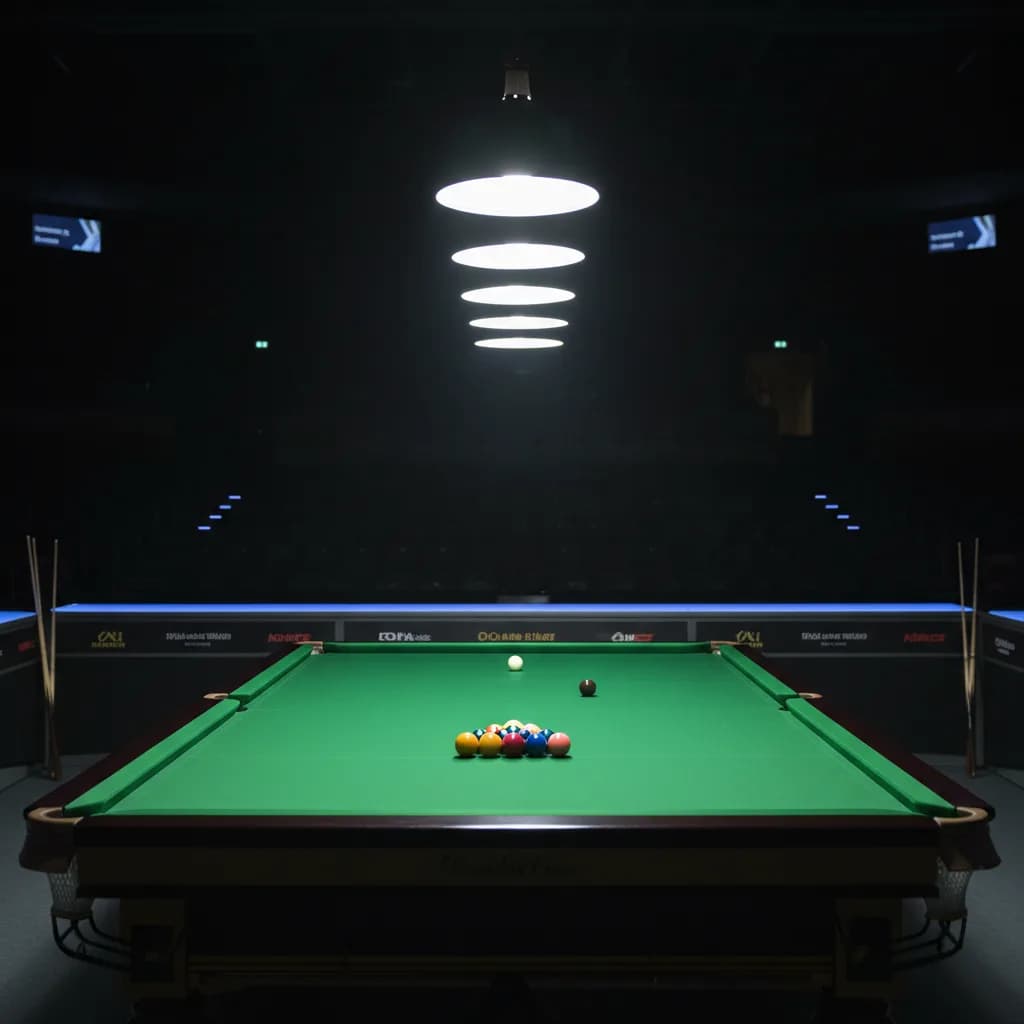
There is a particular kind of silence that falls over a snooker arena when Ronnie O'Sullivan settles over the cue ball. Not the polite, enforced hush of a golf gallery — something more instinctive than that. It is the silence of an audience holding its breath, collectively aware that what they are about to witness might not be repeated in their lifetime. On Friday 5th December, the man who has been producing those moments since most of his current rivals were in primary school turned fifty years old. Half a century. It still feels faintly absurd.
O'Sullivan turned professional in 1992, and in the thirty-three years since, he has not so much rewritten the record books as rendered them almost unrecognisable. His haul of 41 ranking titles stands five clear of Stephen Hendry's previous mark of 36 — a record that itself felt untouchable for the best part of two decades. Add to that an all-time record of 23 Triple Crown titles — seven World Championships, eight Masters, eight UK Championships — and you begin to understand why the debate about snooker's greatest ever player tends to begin and end with the same name.
The Boy Who Beat Hendry
If you want to find the moment the snooker world first truly understood what it had on its hands, go back to Preston in December 1993. A teenager from Wordsley, just two days shy of his eighteenth birthday, stood across the table from the reigning world champion and dismantled him. O'Sullivan defeated Stephen Hendry 10-6 in the UK Championship final, having already dispatched Steve Davis along the way, to become the youngest winner of a ranking event in the sport's history. He was 17 years and 358 days old. The record still stands. It is, on reflection, the kind of debut statement that should have warned everyone of what was coming — and somehow still managed to surprise them.
Five Minutes and Eight Seconds
Ask any snooker fan to close their eyes and picture a single O'Sullivan moment, and a remarkable number will land in the same place: Sheffield, April 1997, the first round of the World Championship. Against Mick Price, in front of a Crucible crowd that gradually realised something extraordinary was unfolding, O'Sullivan compiled the fastest maximum break ever recorded in professional competition. Fifteen reds, fifteen blacks, all six colours — potted with an average shot time of just 8.8 seconds. The whole thing was done in five minutes and eight seconds. Price sat in his chair like a man watching a natural disaster from a very short distance. The crowd erupted. The nickname — The Rocket — stopped being a nickname and started being a simple statement of fact.
It was his first professional 147, and while he has compiled 17 maximum breaks in total — more than any other player in history — that debut perfect frame retains a particular electricity. There is footage of O'Sullivan potting the final black and immediately spinning away from the table, arms wide, as if even he could not quite believe what his hands had just done.
The Record That Keeps Growing
What makes O'Sullivan's legacy so difficult to fully absorb is that it refuses to stop expanding. His century break tally is the highest ever recorded. His maximum break count stands alone. And yet statistics, for all their usefulness, capture only the skeleton of what he does. They cannot account for the quality of the shot-making, the audacity of the safety play when he chooses to use it, or the almost eerie fluency with which he moves around a table — left-handed or right, it barely seems to matter.
He made an early exit from this year's UK Championship, the tournament where his story began all those years ago in Preston, which will have stung a man who has never hidden his desire to keep competing at the highest level. But an off-day at the Barbican Arena does nothing to diminish a career that has lasted longer and shone more brightly than almost anyone predicted when that seventeen-year-old first lifted a ranking trophy.
What Fifty Looks Like
Snooker has produced champions who were more consistent across a single season, perhaps, and champions who ground out titles with a relentlessness that bordered on mechanical. But it has never produced anyone quite like Ronnie O'Sullivan — someone for whom the game appeared to exist in a slightly different dimension, operating at a speed and with a creativity that left opponents and commentators reaching for the same inadequate words. Genius. Natural. Untouchable.
Fifty years old. Forty-one ranking titles. Seventeen maximums. Twenty-three Triple Crown victories. The numbers will likely keep changing. The silence that falls when he settles over the cue ball almost certainly will not.
