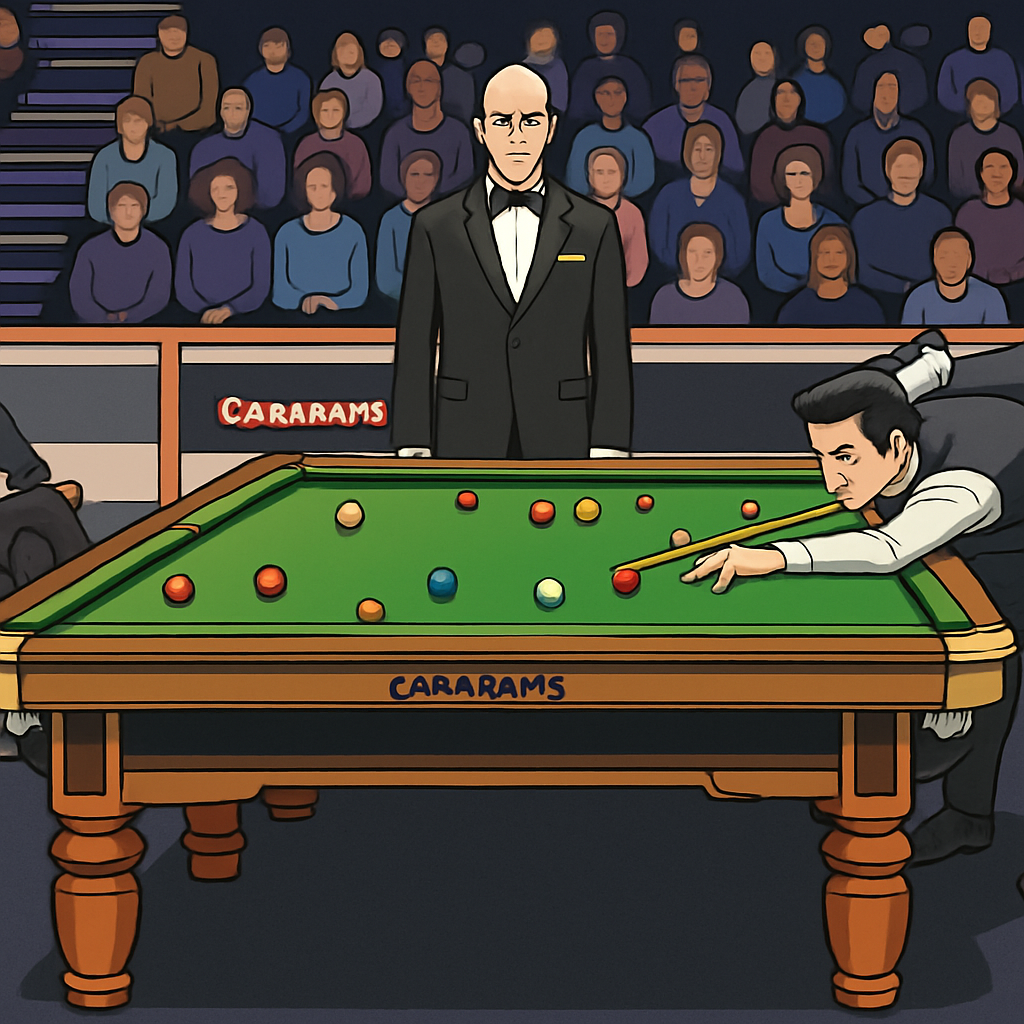
LONDON — World Snooker has moved to quell a brewing controversy at the prestigious Masters tournament, issuing a firm statement dismissing concerns over the standard of the table at Alexandra Palace. The governing body confirmed it had conducted a thorough investigation and found "no" issues with the playing surface, despite mounting criticism from several top players during the opening rounds of the event.
The issue came to the forefront after defending champion Ronnie O’Sullivan and seven-time world champion Stephen Hendry voiced significant complaints following their matches. O’Sullivan, who progressed to the quarter-finals, described the table as "unplayable" in patches, while Hendry, commentating for the BBC, labeled the conditions as "diabolical" and some of the worst he had seen at a major tournament. Their comments sparked a wider debate about table quality at one of snooker's Triple Crown events.
The Spark of Controversy
The discontent first became public knowledge after Ronnie O’Sullivan’s tense 6-3 victory over Ding Junhui. Despite the win, ‘The Rocket’ was visibly frustrated, pointing to inconsistent roll and unpredictable cloth behavior. In his post-match interview, he stated, "I just don't think it's a good idea to have tables that play like that. It's just not good for the game."
Stephen Hendry’s criticism from the commentary box was even more scathing. The snooker legend, known for his meticulous standards during his playing career, did not hold back, saying, "The table is diabolical. The amount of kicks and bad bounces we've seen is unacceptable for this level." His co-commentator, six-time world champion Steve Davis, concurred, noting unusual ball behavior that was affecting the flow of the matches.
World Snooker's Investigation
In response to the high-profile complaints, World Snooker immediately launched a review. The process involved tournament officials, the head fitter, and independent table technicians examining the specific table in question, Table One. They conducted a series of standardised checks, including:
- Measuring the level of the slate bed across multiple points.
- Inspecting the nap and consistency of the Simonis cloth.
- Checking the cleanliness and polish of the balls.
- Testing for humidity levels in the playing arena, which can significantly affect cloth speed and ball reaction.
Following this investigation, a World Snooker spokesperson released a definitive statement: "We have reviewed the table in detail with our technicians and can confirm there are no issues. All the equipment is at the usual impeccable standard for our Triple Crown events." The statement emphasized that the table had passed all technical criteria and met the organization's strict specifications.
Player Reactions and Divided Opinions
Not all players shared the concerns of O’Sullivan and Hendry. World number one and eventual tournament runner-up, Judd Trump, played on the same table and offered a contrasting view. After his first-round victory, Trump remarked, "For me, the table played fine. I didn't notice anything major. Sometimes you get a bad kick, it's part of the game."
This division of opinion highlighted a subjective element in elite snooker. What one player perceives as a critical flaw, another may attribute to the natural variance of the sport. Factors such as playing style, cue action, and even psychological mindset can influence how a player interacts with the table. However, the volume of discussion suggested the issue was more than mere personal preference.
The Role of Conditions and Equipment
Alexandra Palace presents a unique challenge compared to the purpose-built Crucible Theatre in Sheffield, home of the World Championship. The historic venue is subject to greater fluctuations in temperature and atmosphere. Experts point out that even with perfect table fitting, external conditions can cause minute changes that are perceptible to players operating at the very highest level. A spokesperson for the table fitters explained, "We maintain a constant protocol. But in a large, draughty hall, the cloth can react differently from session to session."
Furthermore, the modern game, with its emphasis on heavy scoring and precise long potting, leaves less margin for error. Players are more sensitive than ever to any perceived imperfection, as a single "kick" (an unexpected deviation caused by friction between balls) can cost a frame or even a match in these high-stakes environments.
Historical Context and Precedent
This is not the first time table conditions have been debated at a major tournament. In recent years, there have been isolated complaints at the UK Championship and even at the World Championship. However, for such a concerted critique to emerge at the Masters—an invitational event for the world's top 16—is rare. The tournament is renowned for its prestige and is expected to have flawless playing conditions to match.
The governing body's swift and unequivocal dismissal of the concerns is a clear attempt to maintain the integrity of the event and prevent the narrative from overshadowing the snooker. By stating no issues were found, they are effectively drawing a line under the debate from an official standpoint.
Conclusion: Perception vs. Protocol
The 2024 Masters table controversy ultimately presents a clash between player perception and official protocol. While legends of the game felt compelled to voice their dissatisfaction, citing their wealth of experience, the sport's governing body fell back on the data from its technical checks. World Snooker's statement was a clear message: the equipment met all measurable standards, and the show would go on.
The incident, however, underscores the intense pressure and microscopic scrutiny inherent in professional snooker. It also raises questions about whether the current technical protocols are sufficient to capture the subtle nuances that affect world-class players. For the fans, it added an unexpected layer of drama to the tournament, a debate not about missed pots or tactical errors, but about the very canvas upon which the drama is painted.
As the tournament progressed, the discussion gradually subsided, with attention returning to the breathtaking snooker on display. Yet, the episode serves as a reminder that in a sport of millimetres and fine margins, the dialogue between players and administrators over the quality of the playing field is one that will inevitably continue. For now, World Snooker's verdict stands firm: the tables at the Masters were, and remain, fit for purpose.