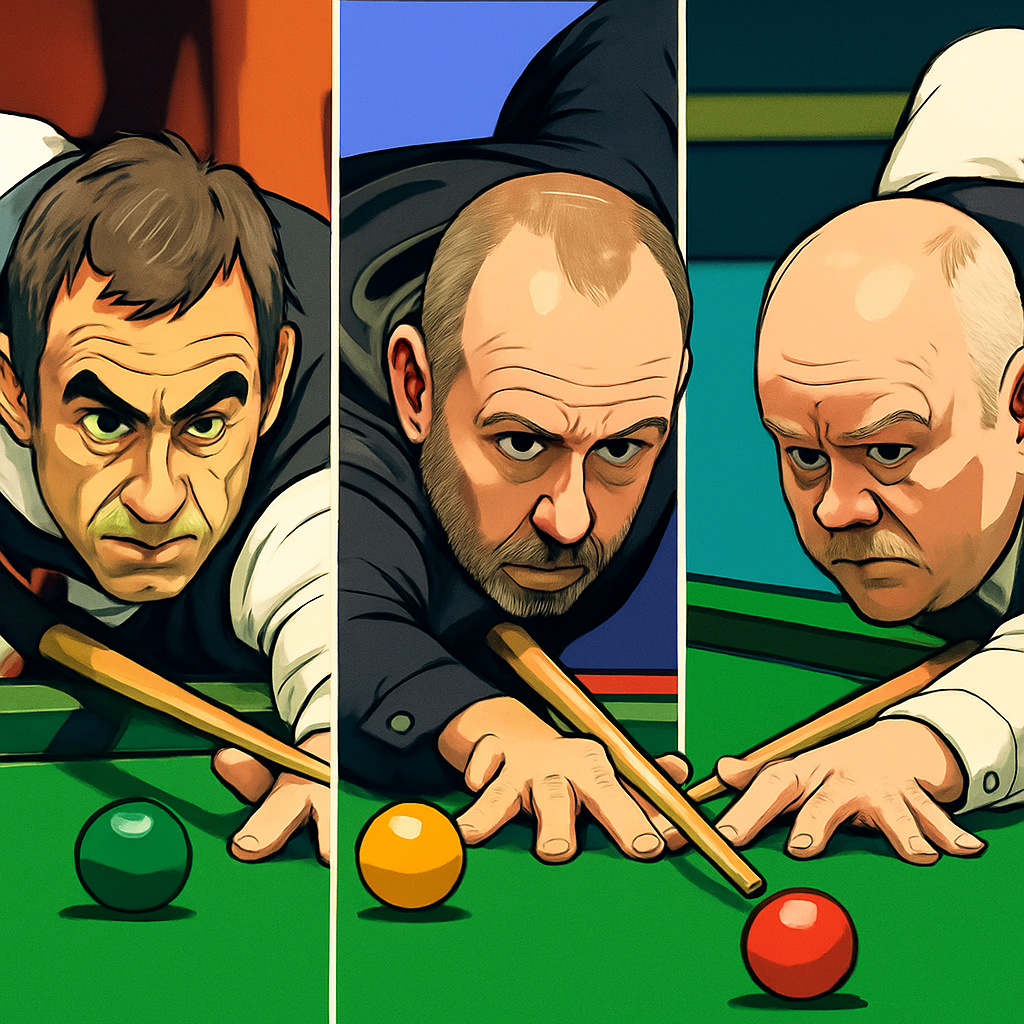
As Ronnie O'Sullivan approaches his 50th birthday in December 2025, he is set to join an exclusive club. His contemporaries, John Higgins and Mark Williams, have already passed that milestone, yet all three members of snooker's fabled 'Class of 92' remain fiercely competitive at the very pinnacle of the sport. In an era where athletic prime is often measured in a player's twenties and early thirties, their sustained excellence defies conventional wisdom. BBC Sport looks at why this golden generation is still shining so brightly, their longevity rewriting the narrative of a snooker player's career.
Unprecedented Longevity and Sustained Success
The statistics alone are staggering. Ronnie O'Sullivan, at 48, is the current world number one and the holder of the World Championship, UK Championship, and Masters titles. His eighth world title in 2024 pulled him clear of Stephen Hendry's long-standing record. Higgins, 49, remains a constant in the world's top 16 and a perennial threat in major tournaments, while Williams, 49, continues to win ranking titles and produce moments of genius that belie his age. Their collective trophy haul is a testament to their dominance across three different decades. This isn't a gentle decline; it's a prolonged peak.
Snooker legend and BBC pundit Stephen Hendry, whose own career was largely over by his mid-forties, has expressed his astonishment. He remarked, "What Ronnie, John, and Mark are doing is simply incredible. To be competing for the biggest prizes against players half their age, and often beating them, is unprecedented. They have changed our perception of what is possible in this game." This sentiment is echoed throughout the sport, as a new generation finds itself having to overcome legends who should, by all historical accounts, be in retirement.
The Pillars of Their Prolonged Dominance
So, what is the secret? How have these three players managed to stave off the physical and mental decline that affects nearly every athlete? The answer lies in a combination of factors, unique to each player but with significant overlap that points to a blueprint for sporting longevity.
Unmatched Skill and Cue Action Mastery
At the core of their success is a foundation of technically sublime cue actions. Williams is renowned for having one of the most natural and purest techniques the game has ever seen. Higgins possesses a rock-solid, repeatable action that holds up under immense pressure. O'Sullivan's technique is a model of fluidity and efficiency. These are not actions that have degraded over time; they are ingrained and reliable. As the game has become more demanding, their superior technique has become an even greater asset, allowing them to maintain consistency where others falter.
Evolution and Tactical Intelligence
All three have refused to stand still. They have evolved their games to suit their changing physicality and the modern era. Higgins has refined his tactical nous to a razor's edge, often outthinking opponents in safety exchanges. Williams famously reinvented himself later in his career, improving his fitness and dedication to prolong his time at the top. O'Sullivan has spoken extensively about managing his schedule and only playing when he is mentally fresh, ensuring that when he does compete, he is fully invested. They are not playing the same game they did in the 1990s; they are playing a smarter, more efficient version of it.
Physical and Mental Conditioning
While snooker is not a physically brutal sport, the demands of tour life—long hours of practice, travel, and the strain of concentration during matches—are significant. All three players have placed a greater emphasis on physical health. Williams' weight loss and running regimen are well-documented. O'Sullivan is a dedicated runner and has spoken about the mental clarity it provides. This focus on fitness aids in recovery, stamina during long sessions, and, crucially, in maintaining the sharpness of mind required for top-level competition.
Mark Williams himself highlighted this shift, stating, "You can't just turn up and expect to win anymore. The standard is so good now. I had to get fitter, I had to practice more. If you don't put the work in, these young lads will blow you away. We've all had to adapt and we've all put the effort in to stay where we are." This professional approach to the ancillary aspects of the sport has been a key differentiator.
A Comparison with Past Generations
To understand the scale of their achievement, one only needs to look back. The previous giants of the game, such as Steve Davis and Stephen Hendry, were certainly competitive into their late thirties and early forties, but their dominance waned significantly as they approached 50. Davis won his last world title at 32, Hendry at 30. The fact that O'Sullivan, Higgins, and Williams are not just participating but winning the sports most prestigious events in their late forties is a complete departure from the historical trend. Several factors contribute to this shift:
- Sporting Science: Better understanding of diet, recovery, and physical conditioning than in previous eras.
- Financial Incentive: The modern tour is more lucrative, providing a greater motivation to prolong a career.
- Professional Standards: The overall professionalism of the sport has risen, and these three have risen with it.
- Pure Love for the Game: Ultimately, they still possess a burning desire to compete and win.
The Legacy of the Class of 92
The impact of O'Sullivan, Higgins, and Williams extends far beyond their trophy cabinets. They have set a new benchmark for what is achievable in a snooker career. They are forcing the next generation to be better, fitter, and more tactically astute, knowing that the path to major titles still runs through these veterans. Their rivalry, which began on the junior circuit over three decades ago, has provided the narrative backbone for modern snooker, a story that is still being written with every tournament they enter.
John Higgins, reflecting on their journey, summed it up poignantly: "When we turned professional, you'd have been laughed at if you said we'd still be at the top at 50. It's mad when you think about it. We've pushed each other for our entire careers. To still be here, still competing, it's something I don't think any of us take for granted. We know we're part of something special." As Ronnie O'Sullivan prepares to join the half-century club, the remarkable story of snooker's golden generation is not about a final curtain call, but about proving that class, indeed, is permanent.